
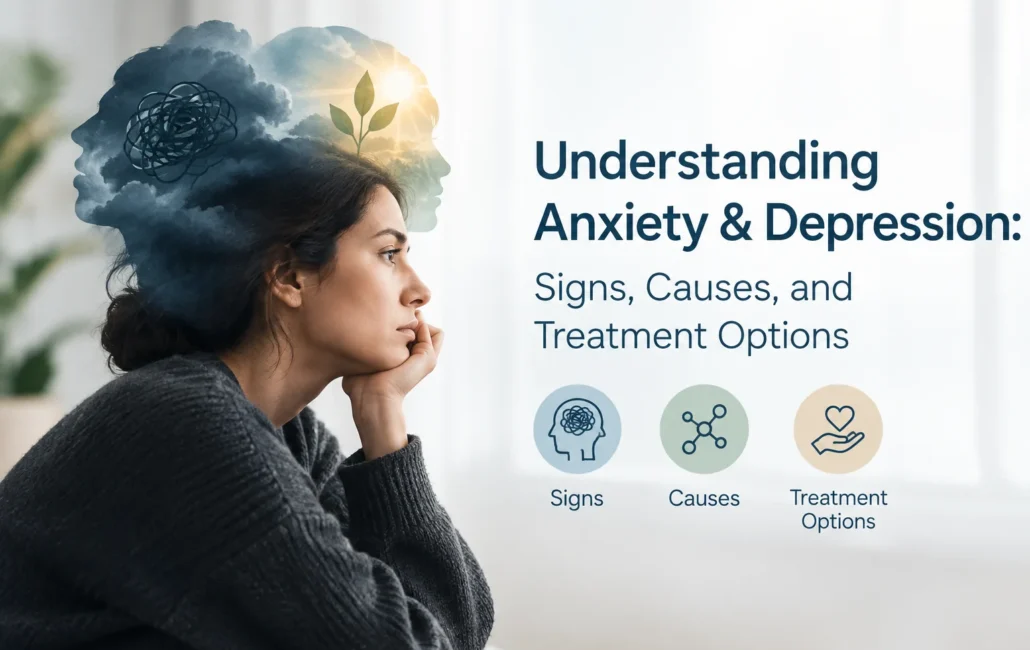

Understanding Anxiety & Depression: Signs, Causes, and Treatment Options
Anxiety and depression are among the most common mental health concerns affecting people today. They can influence how a person thinks, feels, sleeps, works, studies, and interacts with family and friends. While everyone experiences periods of worry, sadness, or stress, anxiety and depression are more than simply having a difficult day. When symptoms become persistent, overwhelming, or interfere with daily life, professional support can make a meaningful difference.
The good news is that anxiety and depression are treatable. With the right combination of professional guidance, psychological therapy, lifestyle changes, social support, and, when appropriate, medication, many people experience significant improvement and return to fulfilling daily lives.
This article explains the common signs of anxiety and depression, possible causes and risk factors, how the two conditions can overlap, and the treatment options available.
What Is Anxiety?
Anxiety is the body’s natural response to perceived danger, uncertainty, or stress. A certain amount of anxiety can be helpful. For example, feeling nervous before an examination, job interview, medical appointment, or important presentation can motivate you to prepare.
The problem arises when anxiety becomes excessive, persistent, or difficult to control—even when there is no immediate danger.
An anxiety disorder may cause a person to feel constantly worried, restless, tense, or fearful. Some people may also experience physical symptoms such as a racing heartbeat, sweating, trembling, muscle tension, stomach discomfort, or difficulty sleeping.
There are several forms of anxiety disorders, including generalized anxiety disorder, panic disorder, social anxiety disorder, and specific phobias. Although their symptoms differ, they can all significantly affect quality of life.
Common Signs of Anxiety
Anxiety can affect the mind and body in different ways. Common symptoms include:
- Excessive or persistent worrying
- Feeling restless or constantly “on edge”
- Difficulty relaxing
- Racing or unwanted thoughts
- Irritability
- Difficulty concentrating
- Fear that something bad will happen
- Muscle tension
- Rapid heartbeat
- Sweating or trembling
- Shortness of breath
- Stomach discomfort
- Headaches
- Difficulty falling or staying asleep
- Avoiding situations because of fear or worry
Not everyone experiences anxiety in the same way. Some people primarily experience psychological symptoms, while others notice physical symptoms first.
If anxiety is making it difficult to work, study, sleep, maintain relationships, or participate in activities you normally enjoy, it may be time to speak with a mental health professional.
What Is Depression?
Depression is more than temporary sadness. Feeling sad after a disappointment, loss, or stressful experience is a normal part of life. Depression, however, involves persistent changes in mood, thinking, motivation, and behavior that can affect everyday functioning.
A person experiencing depression may lose interest in activities they previously enjoyed. They may feel hopeless, exhausted, worthless, or disconnected from other people.
Depression can affect anyone, regardless of age, background, profession, or lifestyle. It is also important to understand that depression is not a sign of weakness or a lack of willpower. It is a genuine mental health condition that deserves appropriate care.
Common Signs of Depression
Depression can present differently from person to person, but common symptoms include:
- Persistent sadness or low mood
- Loss of interest or pleasure in activities
- Low energy or persistent fatigue
- Sleeping too much or too little
- Changes in appetite or weight
- Difficulty concentrating or making decisions
- Feelings of guilt, worthlessness, or helplessness
- Social withdrawal
- Slower movements or feeling unusually restless
- Difficulty completing everyday responsibilities
- Feeling hopeless about the future
- Recurrent thoughts about death or suicide
A person does not need to experience every symptom to have depression. The duration, severity, and impact of symptoms are important when determining whether professional assessment is appropriate.
Anxiety and Depression Can Occur Together
Anxiety and depression are different conditions, but they frequently overlap.
Someone with depression may worry excessively about the future, while someone with anxiety may eventually become emotionally exhausted and lose interest in activities. This overlap can make it difficult for a person to understand what is happening.
For example, an individual might constantly worry about work, finances, relationships, or health. Over time, persistent worry may interfere with sleep and concentration. Lack of sleep and ongoing stress can contribute to fatigue, withdrawal, and low mood.
Because symptoms can overlap, a professional assessment can help determine what someone is experiencing and what type of treatment may be most appropriate.
What Causes Anxiety and Depression?
There is rarely one single cause of anxiety or depression. Mental health is influenced by a combination of biological, psychological, environmental, and social factors.
Genetics and Family History
Some people may have a greater vulnerability to anxiety or depression because these conditions can run in families. Having a family history does not mean that someone will definitely develop a mental health disorder, but it may increase susceptibility.
Stressful Life Events
Major or prolonged stress can contribute to anxiety and depression. Examples include:
- Relationship difficulties
- Financial problems
- Work-related stress
- Academic pressure
- Bereavement
- Major life changes
- Chronic family conflict
- Social isolation
- Traumatic experiences
Even positive changes, such as starting a new job or moving to a new city, can sometimes create significant stress.
Physical Health and Medical Conditions
Some medical conditions can contribute to changes in mood, energy, sleep, or concentration. Certain medications and hormonal or neurological conditions may also influence mental health.
This is one reason a comprehensive professional assessment can be valuable, particularly when symptoms are new, severe, or accompanied by significant physical changes.
Sleep Problems
Poor sleep and mental health are closely connected. Persistent sleep deprivation can worsen irritability, concentration problems, stress, and emotional regulation. At the same time, anxiety and depression can make it difficult to sleep.
Addressing sleep can therefore be an important part of an overall treatment plan.
Substance Use
Alcohol and certain drugs can temporarily change mood or reduce feelings of distress, but they may ultimately worsen anxiety, depression, sleep, and emotional stability.
If substance use has become a way of coping with difficult emotions, discussing it honestly with a healthcare professional can be an important step toward recovery.
Personality and Psychological Factors
Certain patterns of thinking may increase vulnerability to anxiety or depression. For example, constantly expecting the worst, harsh self-criticism, perfectionism, or repeatedly dwelling on negative experiences can contribute to emotional distress.
These patterns can often be addressed through psychological therapy.
When Should You Seek Professional Help?
Many people delay seeking help because they believe their symptoms are not “serious enough.” You do not have to wait until symptoms become overwhelming.
Consider speaking with a psychiatrist, psychologist, therapist, or other qualified mental health professional if:
- Symptoms persist for several weeks
- Anxiety or sadness is interfering with daily activities
- Sleep or appetite has changed significantly
- You are withdrawing from friends or family
- Work or academic performance is declining
- You are struggling to manage responsibilities
- You are using alcohol or substances to cope
- You feel hopeless or unable to cope
- Symptoms are becoming progressively worse
Seeking help early can make it easier to identify the problem and develop an appropriate treatment plan.
How Are Anxiety and Depression Diagnosed?
There is no single blood test or scan that can diagnose most anxiety or depressive disorders. Diagnosis usually involves a detailed conversation with a qualified healthcare professional.
A psychiatrist or other mental health professional may ask about:
- Your symptoms
- How long they have been present
- Sleep and appetite
- Mood and energy levels
- Work, school, or family functioning
- Previous mental health concerns
- Medical history
- Current medications
- Substance use
- Family history
- Major recent life events
In some situations, a doctor may recommend medical tests to rule out physical conditions that could contribute to certain symptoms.
The goal is not simply to label symptoms but to understand the individual as a whole and develop an appropriate treatment approach.
Treatment Options for Anxiety and Depression
Treatment should be personalized. What works well for one person may not be the best approach for another.
Common treatment options include psychotherapy, medication, lifestyle changes, or a combination of these approaches.
1. Psychotherapy
Psychotherapy, sometimes called counseling or talk therapy, is an important treatment option for anxiety and depression.
One commonly used approach is Cognitive Behavioral Therapy (CBT). CBT helps people identify unhelpful patterns of thinking and behavior and develop healthier ways of responding to difficult situations.
Therapy may also help with:
- Managing excessive worry
- Understanding emotional triggers
- Developing coping skills
- Improving communication
- Addressing negative thought patterns
- Building confidence
- Managing stress
- Processing difficult experiences
Other therapeutic approaches may also be appropriate depending on the individual’s symptoms and circumstances.
2. Medication
Medication may be recommended for some people, particularly when symptoms are moderate to severe, persistent, or significantly affecting daily functioning.
Antidepressants are commonly used to treat depression and may also be effective for several anxiety disorders. Other medications may sometimes be considered depending on the specific diagnosis.
Medication should be prescribed and monitored by an appropriately qualified healthcare professional. The choice of medication depends on factors such as symptoms, medical history, other medications, side effects, and individual circumstances.
It is also important not to stop psychiatric medication suddenly without medical advice. A doctor can explain how medication should be started, adjusted, or discontinued safely.
3. Lifestyle Changes
Lifestyle changes are not a replacement for professional treatment when treatment is needed, but they can support mental wellbeing and recovery.
Helpful habits may include:
Regular Physical Activity
Exercise can support mood, reduce stress, and improve overall wellbeing. Even moderate activities such as walking, stretching, or cycling can be useful.
Healthy Sleep Habits
Try to maintain a consistent sleep and wake schedule. Creating a relaxing bedtime routine and reducing excessive screen use before bed may also help.
Balanced Nutrition
Regular, nutritious meals can support physical health and energy levels. Avoid relying heavily on caffeine or other stimulants if they make anxiety symptoms worse.
Social Connection
Isolation can make emotional difficulties feel more overwhelming. Staying connected with trusted friends, family members, or support groups can provide valuable emotional support.
Stress Management
Breathing exercises, mindfulness, relaxation techniques, journaling, hobbies, and time outdoors may help reduce stress and improve emotional regulation.
4. Combining Treatments
For some people, the most effective approach involves more than one form of treatment.
For example, a person might benefit from psychotherapy alongside medication, while also making changes to sleep, exercise, and stress management.
Treatment plans should be individualized rather than based on a one-size-fits-all approach. Regular follow-up with a healthcare professional allows treatment to be adjusted according to progress and changing needs.
Can Anxiety and Depression Be Treated Successfully?
Yes. Many people with anxiety and depression improve significantly with appropriate treatment and ongoing support.
Recovery does not necessarily mean that a person will never experience stress, sadness, or worry again. Mental wellbeing involves learning how to manage difficult emotions and recognizing when additional support is needed.
Some people improve relatively quickly, while others require longer-term treatment. Progress can involve setbacks, and experiencing a difficult period does not mean that treatment has failed.
The most important step is often recognizing that help is available.
How Can Family and Friends Help?
Support from loved ones can make a significant difference.
If someone you care about appears anxious or depressed, try to listen without immediately judging or offering simple solutions. Statements such as “just relax” or “think positively” may unintentionally make the person feel misunderstood.
Instead, you can:
- Listen patiently
- Take their concerns seriously
- Encourage professional support
- Offer practical help when appropriate
- Stay connected
- Avoid judgment
- Be patient with their recovery
You do not need to have all the answers. Sometimes simply letting someone know that they are not alone can be meaningful.
When Is Anxiety or Depression an Emergency?
Severe mental health symptoms require urgent attention.
If someone is thinking about suicide, has plans to harm themselves, feels unable to stay safe, or is experiencing an immediate mental health crisis, seek emergency medical help or contact your local emergency service immediately. Do not leave a person at immediate risk alone.
If you are concerned about someone else, take statements about suicide or self-harm seriously and help them access urgent professional support.
Final Thoughts
Anxiety and depression can affect nearly every part of life, but experiencing these conditions does not mean that a person has to face them alone.
Recognizing the signs is an important first step. Persistent worry, low mood, loss of interest, sleep changes, exhaustion, difficulty concentrating, and withdrawal from everyday life can all be reasons to consider professional assessment.
Treatment may involve psychotherapy, medication, lifestyle changes, or a combination of approaches. The right treatment depends on the individual, their symptoms, medical history, and personal circumstances.
Most importantly, asking for help is a sign of taking your wellbeing seriously—not a sign of weakness.
If anxiety, depression, or persistent emotional distress is affecting your daily life, consider speaking with a qualified mental health professional. An appropriate assessment can help identify what you are experiencing and guide you toward suitable treatment and support.

Shehzad Kamran M.D
- Shehzad Kamran M.D
- Shehzad Kamran M.D